🇱🇹 Lithuania
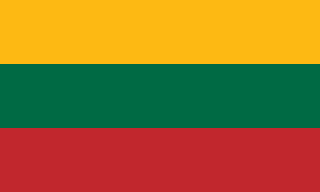 National Flag
Geography & Borders


Introduction & Background
55°N 24°E / 55°N 24°E / 55; 24 Lithuania (/ˌlɪθjuˈeɪniə/ⓘ;13 Template:Lang-lt Template:IPA-lt), officially the Republic of Lithuania (Template:Lang-lt Template:IPA-lt), is a country in the Baltic region of Europe.a It is one of three Baltic states and lies on the eastern shore of the Baltic Sea. Lithuania shares land borders with Latvia to the north, Belarus to the east and south, Poland to the south, and Russia to the southwest.b It has a maritime border with Sweden to the west on the Baltic Sea. Lithuania covers an area of 65,300km2 (25,200sqmi), with a population of 2.8 million. Its capital and largest city is Vilnius; other major cities are Kaunas and Klaipėda. Lithuanians belong to the ethno-linguistic group of the Balts and speak Lithuanian, one of only a few living Baltic languages.
For millennia the southeastern shores of the Baltic Sea were inhabited by various Baltic tribes. In the 1230s, Lithuanian lands were united by Mindaugas, becoming king and founding the Kingdom of Lithuania on 6 July 1253. In the 14th century, the Grand Duchy of Lithuania was the largest country in Europe;19 present-day Lithuania, Belarus, most of Ukraine, and parts of Poland and Russia were all lands of the Grand Duchy. The Crown of the Kingdom of Poland and the Grand Duchy of Lithuania were in a de facto personal union from 1386 with the marriage of the Polish queen Hedwig and Lithuania's Grand Duke Jogaila, who was crowned King jure uxoris Władysław II Jagiełło of Poland. The Commonwealth of Poland and Lithuania was established by the Union of Lublin in July 1569. The Commonwealth lasted more than two centuries, until neighbouring countries dismantled it in 1772–1795, with the Russian Empire annexing most of Lithuania's territory. As World War I ended, Lithuania's Act of Independence was signed on 16 February 1918, founding the modern Republic of Lithuania. In World War II, Lithuania was occupied first by the Soviet Union and then by Nazi Germany. Towards the end of the war in 1944, when the Germans were retreating, the Soviet Union reoccupied Lithuania. Lithuanian armed resistance to the Soviet occupation lasted until the early 1950s. On 11 March 1990, a year before the formal dissolution of the Soviet Union, Lithuania passed the Act of the Re-Establishment of the State of Lithuania, becoming the first Soviet republic to proclaim its independence.20
Geography & Climate
Temperature (2025)
Precipitation & Snow (2025)
Atmospheric Pressure (2025)
Thunderstorm Days (2025)
Wind Speed (2025)
Air Quality — Monthly Averages (2025)
| Metric | Jan | Feb | Mar | Apr | May | Jun | Jul | Aug | Sep | Oct | Nov | Dec |
|---|---|---|---|---|---|---|---|---|---|---|---|---|
| PM2.5 μg/m³ | 9 | 8.9 | 10 | 5.8 | 3.7 | 3.8 | 4.3 | 4.4 | 5.4 | 5.7 | 9.6 | 9.2 |
| PM10 μg/m³ | 10.3 | 10.2 | 11.8 | 7.9 | 4.8 | 4.9 | 5.1 | 5.9 | 7.2 | 7.2 | 11.4 | 11.1 |
| O₃ μg/m³ | 49.4 | 67.9 | 65.5 | 74.6 | 69.2 | 68.6 | 66.4 | 61.9 | 59.9 | 47.5 | 37.6 | 44.5 |
| NO₂ μg/m³ | 3.7 | 3.2 | 2.4 | 1.6 | 1.7 | 1.2 | 1.7 | 1.7 | 2 | 2.8 | 4 | 3.6 |
| SO₂ μg/m³ | 1.1 | 1.3 | 0.7 | 0.5 | 0.2 | 0.2 | 0.2 | 0.3 | 0.4 | 0.4 | 0.7 | 0.8 |
| CO μg/m³ | 195 | 212 | 194 | 158 | 141 | 136 | 140 | 151 | 143 | 154 | 181 | 179 |
Pollen Levels — Monthly (2025)
| Type | Jan | Feb | Mar | Apr | May | Jun | Jul | Aug | Sep | Oct | Nov | Dec |
|---|---|---|---|---|---|---|---|---|---|---|---|---|
| Grass | 0 | 0 | 0 | 0 | 1 | 13 | 11 | 3 | 0 | 0 | 0 | 0 |
| Birch | 0 | 0 | 3 | 172 | 22 | 0 | 0 | 0 | 0 | 0 | 0 | 0 |
| Alder | 0 | 0 | 21 | 0 | 0 | 0 | 0 | 0 | 0 | 0 | 0 | 0 |
| Ragweed | 0 | 0 | 0 | 0 | 0 | 0 | 0 | 1 | 2 | 0 | 0 | 0 |
| Mugwort | 0 | 0 | 0 | 0 | 0 | 0 | 2 | 1 | 0 | 0 | 0 | 0 |
| Olive | 0 | 0 | 0 | 0 | 0 | 0 | 0 | 0 | 0 | 0 | 0 | 0 |
⛰️ Highest Elevation
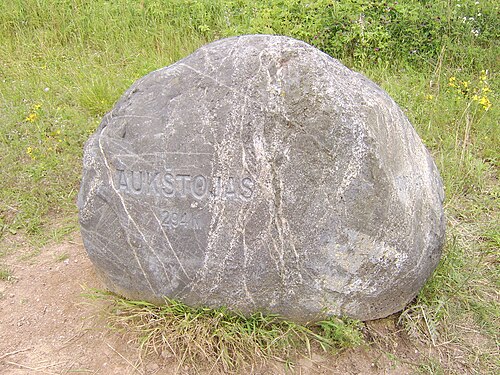
- Map Locations: Google Maps | OpenStreetMap