🇫🇮 Finland
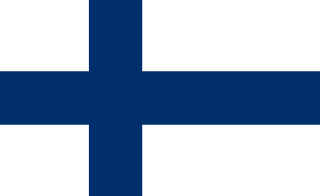 National Flag
Geography & Borders


Introduction & Background
Finland (Template:Lang-fi Template:IPA-fi; Template:Lang-sv Template:IPA-sv), officially the Republic of Finland (Template:Lang-fi; Template:Lang-sv (listen to allⓘ)),note 2 is a Nordic country in Northern Europe. It shares land borders with Sweden to the northwest, Norway to the north, and Russia to the east, with the Gulf of Bothnia to the west and the Gulf of Finland across Estonia to the south. Finland covers an area of 338,455 square kilometres (130,678mi2) with a population of 5.6 million. Helsinki is the capital and largest city, forming a larger metropolitan area with the neighbouring cities of Espoo, Kauniainen, and Vantaa. The vast majority of the population are ethnic Finns. Finnish, alongside Swedish, are the official languages. Swedish is the native language of 5.2% of the population.11 Finland's climate varies from humid continental in the south to the boreal in the north. The land cover is primarily a boreal forest biome, with more than 180,000 recorded lakes.12
Finland was first inhabited around 9000BC after the Last Glacial Period.13 The Stone Age introduced several different ceramic styles and cultures. The Bronze Age and Iron Age were characterized by extensive contacts with other cultures in Fennoscandia and the Baltic region.14 From the late 13th century, Finland gradually became an integral part of Sweden as a consequence of the Northern Crusades. In 1809, as a result of the Finnish War, Finland became part of the Russian Empire as the autonomous Grand Duchy of Finland, during which Finnish art flourished and the idea of independence began to take hold. In 1906, Finland became the first European state to grant universal suffrage, and the first in the world to give all adult citizens the right to run for public office.15note 3 Nicholas II, the last tsar of Russia, tried to russify Finland and terminate its political autonomy, but after the 1917 Russian Revolution, Finland declared independence from Russia. In 1918, the fledgling state was divided by the Finnish Civil War. During World War II, Finland fought the Soviet Union in the Winter War and the Continuation War, and Nazi Germany in the Lapland War. It subsequently lost parts of its territory, but maintained its independence.
Geography & Climate
Temperature (2025)
Precipitation & Snow (2025)
Atmospheric Pressure (2025)
Thunderstorm Days (2025)
Wind Speed (2025)
Air Quality — Monthly Averages (2025)
| Metric | Jan | Feb | Mar | Apr | May | Jun | Jul | Aug | Sep | Oct | Nov | Dec |
|---|---|---|---|---|---|---|---|---|---|---|---|---|
| PM2.5 μg/m³ | 4.3 | 6.9 | 4.3 | 4 | 2.8 | 2.9 | 5.7 | 3.1 | 4.3 | 3.7 | 4.3 | 4.3 |
| PM10 μg/m³ | 5.8 | 8.3 | 5.5 | 5.2 | 3.8 | 3.8 | 6.6 | 4.1 | 5.6 | 5 | 6.1 | 5.8 |
| O₃ μg/m³ | 55.6 | 61.2 | 69.3 | 73 | 72.7 | 65.8 | 69.1 | 61.9 | 61.4 | 51.1 | 49.8 | 53.1 |
| NO₂ μg/m³ | 4.9 | 4.8 | 4.3 | 3.4 | 2.5 | 2.1 | 3.6 | 2.1 | 3.9 | 4.1 | 4.6 | 2.8 |
| SO₂ μg/m³ | 0.7 | 1 | 0.7 | 0.6 | 0.4 | 0.2 | 0.6 | 0.2 | 0.5 | 0.6 | 0.5 | 0.5 |
| CO μg/m³ | 186 | 220 | 185 | 169 | 146 | 134 | 154 | 153 | 148 | 156 | 166 | 164 |
Pollen Levels — Monthly (2025)
| Type | Jan | Feb | Mar | Apr | May | Jun | Jul | Aug | Sep | Oct | Nov | Dec |
|---|---|---|---|---|---|---|---|---|---|---|---|---|
| Grass | 0 | 0 | 0 | 0 | 0 | 7 | 10 | 2 | 0 | 0 | 0 | 0 |
| Birch | 0 | 0 | 1 | 174 | 379 | 2 | 0 | 0 | 0 | 0 | 0 | 0 |
| Alder | 0 | 0 | 20 | 1 | 0 | 0 | 0 | 0 | 0 | 0 | 0 | 0 |
| Ragweed | 0 | 0 | 0 | 0 | 0 | 0 | 0 | 0 | 1 | 0 | 0 | 0 |
| Mugwort | 0 | 0 | 0 | 0 | 0 | 0 | 3 | 1 | 0 | 0 | 0 | 0 |
| Olive | 0 | 0 | 0 | 0 | 0 | 0 | 0 | 0 | 0 | 0 | 0 | 0 |
⛰️ Highest Elevation

- Map Locations: Google Maps | OpenStreetMap