🇪🇪 Estonia
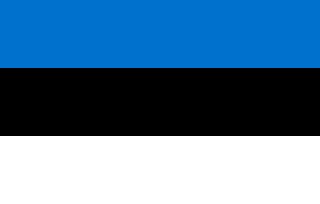 National Flag
Geography & Borders


Introduction & Background
Estonia,a formally the Republic of Estonia,b is a country by the Baltic Sea in Northern Europe. It is bordered to the north by the Gulf of Finland across from Finland, to the west by the sea across from Sweden, to the south by Latvia, and to the east by Lake Peipus and Russia. The territory of Estonia consists of the mainland, the larger islands of Saaremaa and Hiiumaa, and over 2,200 other islands and islets on the eastern coast of the Baltic Sea,9 covering a total area of 45,339 square kilometres (17,505sqmi).2 The capital city Tallinn and Tartu are the two largest urban areas of the country. The Estonian language is the autochthonous and the official language of Estonia; it is the first language of the majority of its population, as well as the world's second most spoken Finnic language.
The land of what is now modern Estonia has been inhabited by Homo sapiens since at least 9,000 BC. The medieval indigenous population of Estonia was one of the last "pagan" civilisations in Europe to adopt Christianity following the Papal-sanctioned Livonian Crusade in the 13th century.10 After centuries of successive rule by the Teutonic Order, Denmark, Sweden, and the Russian Empire, a distinct Estonian national identity began to emerge in the mid-19th century. This culminated in the 24 February 1918 Estonian Declaration of Independence from the then warring Russian and German Empires. After the end of World War I, in the 1918–1920 War of Independence, Estonians were able to repel the Bolshevik Russian invasion and successfully defended their newborn freedom. Democratic throughout most of the interwar period, Estonia declared neutrality at the outbreak of World War II, but the country was repeatedly contested, invaded and occupied, first by Stalinist Soviet Union in 1940, then by Nazi Germany in 1941, and ultimately reoccupied in 1944 by, and annexed into, the USSR as an administrative subunit (Estonian SSR). After the loss of its de facto independence to the Soviet Union, Estonia's de jure state continuity was preserved by diplomatic representatives and the government-in-exile. Following the bloodless Estonian "Singing Revolution" of 1988–1990, the nation's de facto independence was restored on 20 August 1991.
Geography & Climate
Temperature (2025)
Precipitation & Snow (2025)
Atmospheric Pressure (2025)
Thunderstorm Days (2025)
Wind Speed (2025)
Air Quality — Monthly Averages (2025)
| Metric | Jan | Feb | Mar | Apr | May | Jun | Jul | Aug | Sep | Oct | Nov | Dec |
|---|---|---|---|---|---|---|---|---|---|---|---|---|
| PM2.5 μg/m³ | 5 | 8.1 | 5.1 | 4.9 | 3 | 3.1 | 5.4 | 3.3 | 4.2 | 4.5 | 5.8 | 5.5 |
| PM10 μg/m³ | 6.2 | 9.3 | 6.4 | 6.5 | 3.9 | 4.1 | 6.3 | 4.3 | 5.5 | 5.8 | 7.4 | 7.3 |
| O₃ μg/m³ | 55 | 62.3 | 67.5 | 73.7 | 71.6 | 64.7 | 63.7 | 59.7 | 59.7 | 49.7 | 47.6 | 51.7 |
| NO₂ μg/m³ | 3.1 | 3.3 | 2.3 | 2.4 | 1.9 | 1.4 | 1.9 | 1.3 | 1.4 | 2.3 | 3 | 2.6 |
| SO₂ μg/m³ | 0.4 | 1 | 0.4 | 0.4 | 0.3 | 0.1 | 0.3 | 0.1 | 0.3 | 0.3 | 0.3 | 0.3 |
| CO μg/m³ | 182 | 218 | 180 | 164 | 142 | 132 | 151 | 151 | 143 | 153 | 165 | 164 |
Pollen Levels — Monthly (2025)
| Type | Jan | Feb | Mar | Apr | May | Jun | Jul | Aug | Sep | Oct | Nov | Dec |
|---|---|---|---|---|---|---|---|---|---|---|---|---|
| Grass | 0 | 0 | 0 | 0 | 2 | 20 | 26 | 5 | 1 | 0 | 0 | 0 |
| Birch | 0 | 0 | 1 | 247 | 279 | 2 | 0 | 0 | 0 | 0 | 0 | 0 |
| Alder | 0 | 0 | 13 | 1 | 0 | 0 | 0 | 0 | 0 | 0 | 0 | 0 |
| Ragweed | 0 | 0 | 0 | 0 | 0 | 0 | 0 | 0 | 1 | 0 | 0 | 0 |
| Mugwort | 0 | 0 | 0 | 0 | 0 | 0 | 1 | 1 | 0 | 0 | 0 | 0 |
| Olive | 0 | 0 | 0 | 0 | 0 | 0 | 0 | 0 | 0 | 0 | 0 | 0 |
⛰️ Highest Elevation
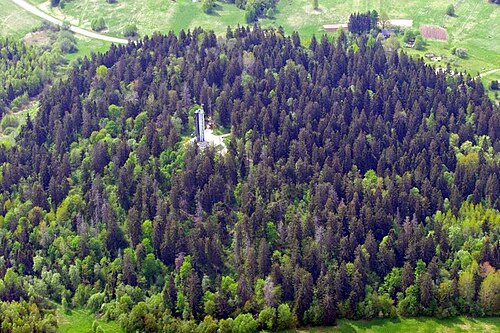
- Map Locations: Google Maps | OpenStreetMap