🇱🇧 Lebanon
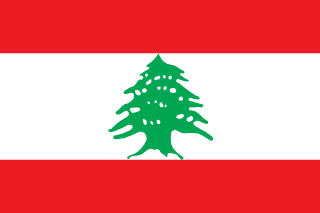 National Flag
Geography & Borders


Introduction & Background
33°50′N 35°50′E / 33.833°N 35.833°E / 33.833; 35.833Lebanon (/ˈlɛbənɒn, -nən/ⓘ LEB-ə-non, -nən; Template:Lang-ar, Template:IPA-apc; Template:Lang-fr), officially the Republic of Lebanon (Template:Lang-ar) or the Lebanese Republic,a is a country in Western Asia. It is located between Syria to the north and east and Israel to the south, while Cyprus lies to its west across the Mediterranean Sea; its location at the crossroads of the Mediterranean Basin and the Arabian hinterland has contributed to its rich history and shaped a cultural identity of religious diversity.15 It is part of the Levant region of the Middle East. Lebanon is home to roughly six million people and covers an area of 10,452 square kilometres (4,036sqmi), making it the second smallest country in continental Asia. The official language of the state is Arabic, while French is also formally recognized; the Lebanese dialect of Arabic is used alongside Modern Standard Arabic throughout the country.
The earliest evidence of civilization in Lebanon dates back over 7000 years, predating recorded history.16 Modern-day Lebanon was home to the Phoenicians, a maritime culture that flourished for almost 3000 years (c.3200–539 BC). In 64 BC, the Roman Empire conquered the region, and it eventually became among the empire's leading centers of Christianity.17 The Mount Lebanon range saw the emergence of a monastic tradition known as the Maronite Church. Upon the region's conquest by the early Arab Muslims, the Maronites held onto their religion and identity. However, a new religious group known as the Druze eventually established themselves in Mount Lebanon as well, generating a religious divide that has lasted for centuries. During the Crusades, the Maronites re-established contact with the Roman Catholic Church and asserted their communion with Rome. The Maronite Catholic and the Druze founded modern Lebanon in the early eighteenth century, through the ruling and social system known as the "Maronite-Druze dualism" in Mount Lebanon Mutasarrifate.18
Geography & Climate
Temperature (2025)
Precipitation & Snow (2025)
Atmospheric Pressure (2025)
Thunderstorm Days (2025)
Wind Speed (2025)
Air Quality — Monthly Averages (2025)
| Metric | Jan | Feb | Mar | Apr | May | Jun | Jul | Aug | Sep | Oct | Nov | Dec |
|---|---|---|---|---|---|---|---|---|---|---|---|---|
| PM2.5 μg/m³ | 20.1 | 13 | 21.9 | 15.7 | 16.1 | 15.6 | 13.7 | 14.8 | 14.7 | 12.4 | 18.9 | 14.6 |
| PM10 μg/m³ | 28.3 | 18.1 | 34.7 | 29.9 | 29.1 | 24.3 | 22.8 | 25.2 | 24.9 | 22.3 | 35.7 | 26.3 |
| O₃ μg/m³ | 71.9 | 83.6 | 87.6 | 91.6 | 88.9 | 87.4 | 88.1 | 86.8 | 86.5 | 79.4 | 73.3 | 67.9 |
| NO₂ μg/m³ | 8.2 | 5.3 | 6.4 | 4.4 | 4.4 | 4.2 | 4 | 4.1 | 4.6 | 5.5 | 7.3 | 6.8 |
| SO₂ μg/m³ | 21.3 | 14 | 15.3 | 10.1 | 10.8 | 11.5 | 10.1 | 10.8 | 12.7 | 16.1 | 16.1 | 16.1 |
| CO μg/m³ | 230 | 205 | 219 | 173 | 158 | 163 | 149 | 151 | 155 | 159 | 191 | 192 |
Pollen Levels — Monthly (2025)
| Type | Jan | Feb | Mar | Apr | May | Jun | Jul | Aug | Sep | Oct | Nov | Dec |
|---|---|---|---|---|---|---|---|---|---|---|---|---|
| Grass | 0 | 0 | 0 | 1 | 1 | 1 | 1 | 0 | 0 | 0 | 0 | 0 |
| Birch | 0 | 0 | 0 | 0 | 0 | 0 | 0 | 0 | 0 | 0 | 0 | 0 |
| Alder | 0 | 0 | 0 | 0 | 0 | 0 | 0 | 0 | 0 | 0 | 0 | 0 |
| Ragweed | 0 | 0 | 0 | 0 | 0 | 0 | 0 | 0 | 0 | 0 | 0 | 0 |
| Mugwort | 0 | 0 | 0 | 0 | 0 | 0 | 0 | 0 | 0 | 0 | 0 | 0 |
| Olive | 0 | 0 | 0 | 5 | 3 | 2 | 0 | 0 | 0 | 0 | 0 | 0 |
⛰️ Highest Elevation

- Map Locations: Google Maps | OpenStreetMap