🇨🇳 China
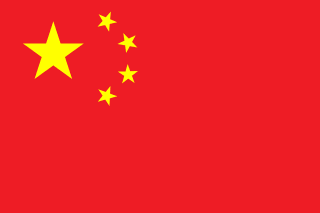 National Flag
Geography & Borders
 Afghanistan
 Bhutan
 Myanmar
 Hong Kong
 India
India Kazakhstan
 Nepal
Nepal North Korea
 Kyrgyzstan
 Laos
Laos Macau
Macau Mongolia
 Pakistan
 Russia
 Tajikistan
 Vietnam
Introduction & Background
China (Chinese 中国; pinyin Zhōngguó), officially the People's Republic of China (PRC),k is a country in East Asia. It is the world's most populous country, with a population exceeding 1.4 billion, slightly ahead of India. China spans the equivalent of five time zones and borders fourteen countries by land,l the most of any country in the world, tied with Russia. Covering an area of approximately 9.6million square kilometres (3,700,000sqmi), it is the world's third largest country by total land area.m The country consists of 22 provinces,n five autonomous regions, four municipalities, and two Special Administrative Regions (Hong Kong and Macau). The national capital is Beijing, and the most populous city and financial center is Shanghai.
Modern Chinese trace their origins to a cradle of civilization in the fertile basin of the Yellow River in the North China Plain. The semi-legendary Xia dynasty in the 21st century BCE and the well-attested Shang and Zhou dynasties developed a bureaucratic political system to serve hereditary monarchies, or dynasties. Chinese writing, Chinese classic literature, and the Hundred Schools of Thought emerged during this period and influenced China and its neighbors for centuries to come. In the third century BCE, Qin's wars of unification created the first Chinese empire, the short-lived Qin dynasty. The Qin was followed by the more stable Han dynasty (206 BCE – 220 CE), which established a model for nearly two millennia in which the Chinese empire was one of the world's foremost economic powers. The empire expanded, fractured and re-unified, was conquered and reestablished, absorbed foreign religions and ideas, and made world-leading scientific advances, such as the Four Great Inventions: gunpowder, paper, the compass, and printing. After centuries of disunion following the fall of the Han, the Sui (581–618) and Tang (618–907) dynasties reunified the empire. The multi-ethnic Tang welcomed foreign trade and culture that came over the Silk Road and adapted Buddhism to Chinese needs. The early modern Song dynasty (960–1279) became increasingly urban and commercial. The civilian scholar-official or literati used the examination system and the doctrines of Neo-Confucianism to replace the military aristocrats of earlier dynasties. The Mongol invasion established the Yuan dynasty in 1279, but the Ming dynasty (1368–1644) re-established Han Chinese control. The Manchu-led Qing dynasty nearly doubled the empire's territory and established a multi-ethnic state that was the basis of the modern Chinese nation, but suffered heavy losses to foreign imperialism in the 19th century.
Geography & Climate
Temperature (2025)
Precipitation & Snow (2025)
Atmospheric Pressure (2025)
Thunderstorm Days (2025)
Wind Speed (2025)
Air Quality — Monthly Averages (2025)
| Metric | Jan | Feb | Mar | Apr | May | Jun | Jul | Aug | Sep | Oct | Nov | Dec |
|---|---|---|---|---|---|---|---|---|---|---|---|---|
| PM2.5 μg/m³ | 101 | 75.7 | 63.7 | 43.6 | 49.3 | 50.9 | 50.5 | 59.7 | 65.5 | 74.6 | 97.4 | 110.4 |
| PM10 μg/m³ | 109.2 | 85.2 | 96.1 | 87 | 63 | 63.4 | 51.7 | 66.7 | 77.1 | 81.7 | 117.1 | 115 |
| O₃ μg/m³ | 17.2 | 33.3 | 48.4 | 62 | 75.2 | 83 | 78.1 | 63.3 | 38.1 | 15.7 | 11.1 | 11.3 |
| NO₂ μg/m³ | 51.4 | 46.4 | 39.2 | 37.6 | 44.2 | 45.9 | 51.8 | 65 | 64.2 | 55.4 | 54.1 | 53.4 |
| SO₂ μg/m³ | 76.9 | 50.9 | 32.6 | 24.2 | 25.2 | 26.9 | 29 | 34.5 | 37.3 | 48.7 | 73.6 | 93.6 |
| CO μg/m³ | 1144 | 878 | 561 | 474 | 585 | 574 | 718 | 852 | 750 | 923 | 1246 | 1418 |
Pollen Levels — Monthly (2025)
⛰️ Highest Elevation
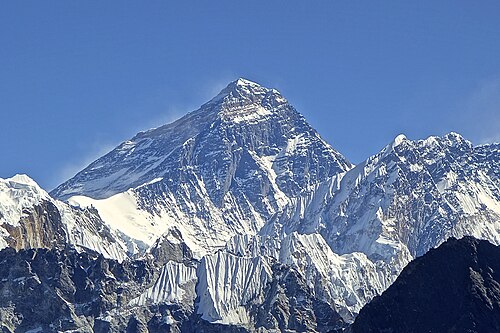
- Map Locations: Google Maps | OpenStreetMap