🇰🇪 Kenya
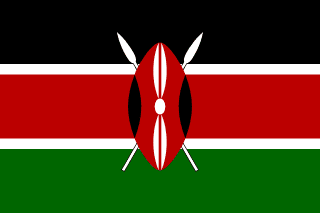 National Flag
Geography & Borders


Introduction & Background
Kenya, officially the Republic of Kenya (Template:Lang-sw), is a country in East Africa. At 580,367 square kilometres (224,081sqmi), Kenya is the world's 48th largest country by area. With a population of more than 47.6 million in the 2019 census,11 Kenya is the 27th most populous country in the world.6 Kenya's capital and largest city is Nairobi, while its oldest, currently second largest city, and first capital is the coastal city of Mombasa. Kisumu City is the third-largest city and also an inland port on Lake Victoria. Other important urban centres include Nakuru and Eldoret. As of 2020, Kenya is the third-largest economy in sub-Saharan Africa after Nigeria and South Africa.12 Kenya is bordered by South Sudan to the northwest, Ethiopia to the north, Somalia to the east, Uganda to the west, Tanzania to the south, and the Indian Ocean to the southeast. Its geography, climate and population vary widely, ranging from cold snow-capped mountaintops (Batian, Nelion and Point Lenana on Mount Kenya) with vast surrounding forests, wildlife and fertile agricultural regions to temperate climates in western and rift valley counties and dry less fertile arid and semi-arid areas and absolute deserts (Chalbi Desert and Nyiri Desert).
Kenya's earliest inhabitants were hunter-gatherers, like the present-day Hadza people.1314 According to archaeological dating of associated artifacts and skeletal material, Cushitic speakers first settled in Kenya's lowlands between 3,200 and 1,300 BC, a phase known as the Lowland Savanna Pastoral Neolithic. Nilotic-speaking pastoralists (ancestral to Kenya's Nilotic speakers) began migrating from present-day South Sudan into Kenya around 500 BC.15 Bantu people settled at the coast and the interior between 250 BC and 500 AD.16 European contact began in 1500 AD with the Portuguese Empire, and effective colonisation of Kenya began in the 19th century during the European exploration of the interior. Modern-day Kenya emerged from a protectorate established by the British Empire in 1895 and the subsequent Kenya Colony, which began in 1920. Numerous disputes between the UK and the colony led to the Mau Mau revolution, which began in 1952, and the declaration of independence in 1963. After independence, Kenya remained a member of the Commonwealth of Nations. The current constitution was adopted in 2010 and replaced the 1963 independence constitution.
Geography & Climate
Temperature (2025)
Precipitation & Snow (2025)
Atmospheric Pressure (2025)
Thunderstorm Days (2025)
Wind Speed (2025)
Air Quality — Monthly Averages (2025)
| Metric | Jan | Feb | Mar | Apr | May | Jun | Jul | Aug | Sep | Oct | Nov | Dec |
|---|---|---|---|---|---|---|---|---|---|---|---|---|
| PM2.5 μg/m³ | 13.6 | 10.4 | 11 | 11.5 | 13.8 | 18.8 | 23.2 | 19.8 | 13.6 | 13 | 9.7 | 10.7 |
| PM10 μg/m³ | 14.4 | 11.3 | 11.5 | 12.1 | 16.1 | 24.9 | 27.7 | 20.8 | 14.5 | 14.6 | 10.3 | 11.3 |
| O₃ μg/m³ | 73.5 | 73.9 | 68.4 | 63 | 59.2 | 65.4 | 70.2 | 71.6 | 77 | 72.8 | 60.3 | 66.4 |
| NO₂ μg/m³ | 5.8 | 5.5 | 5.9 | 8 | 8.3 | 8.6 | 9.7 | 7.3 | 6.4 | 6.2 | 6 | 4.7 |
| SO₂ μg/m³ | 3.4 | 2.8 | 3.3 | 3.9 | 3.8 | 4.1 | 4 | 3.7 | 3.5 | 3.5 | 2.9 | 2.7 |
| CO μg/m³ | 226 | 198 | 217 | 222 | 232 | 238 | 247 | 244 | 226 | 231 | 186 | 208 |
Pollen Levels — Monthly (2025)
⛰️ Highest Elevation
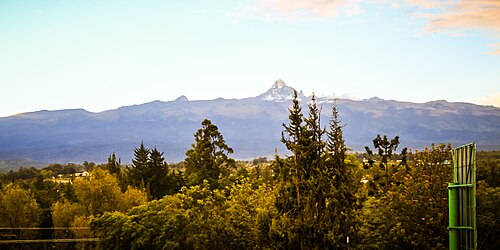
- Map Locations: Google Maps | OpenStreetMap