🇨🇺 Cuba
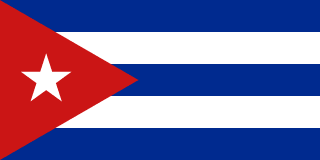 National Flag
Geography & Borders
This country has no land borders.
Introduction & Background
Cuba (/ˈkjuːbə/ⓘ KEW-bə, Template:IPA-es), officially the Republic of Cuba (Template:Lang-es Template:IPA-es), is an island country comprising the island of Cuba, as well as Isla de la Juventud and several minor archipelagos. Cuba is located where the northern Caribbean Sea, Gulf of Mexico, and Atlantic Ocean meet. Cuba is located east of the Yucatán Peninsula (Mexico), south of both the American state of Florida and the Bahamas, west of Hispaniola (Haiti/Dominican Republic), and north of both Jamaica and the Cayman Islands. Havana is the largest city and capital; other major cities include Santiago de Cuba and Camagüey. The official area of the Republic of Cuba is 109,884km2 (42,426sqmi) (without the territorial waters) but a total of 350,730km² (135,418 sq mi) including the exclusive economic zone. Cuba is the second-most populous country in the Caribbean after Haiti, with over 11 million inhabitants.13
The territory that is now Cuba was inhabited by the Ciboney people from the 4th millennium BC with the Guanahatabey and Taino peoples until Spanish colonization in the 15th century.14 From the 15th century, it was a colony of Spain, and slavery was abolished in 1886, until the Spanish–American War of 1898, when Cuba was occupied by the United States and gained independence in 1902. In 1940, Cuba implemented a new constitution, but mounting political unrest culminated in a coup in 1952 and the subsequent dictatorship of Fulgencio Batista,15 which was later overthrown in January 1959 by the 26th of July Movement during the Cuban Revolution, which afterwards established communist rule under the leadership of Fidel Castro.161718 The country was a point of contention during the Cold War between the Soviet Union and the United States, and a nuclear war nearly broke out during the Cuban Missile Crisis of 1962.19 Following the collapse of the Soviet Union, Cuba faced a severe economic downturn in the 1990s, known as the Special Period. In 2008, Fidel Castro resigned after 49 years of leadership of Cuba and was replaced by his brother Raúl Castro.
Geography & Climate
Temperature (2025)
Precipitation & Snow (2025)
Atmospheric Pressure (2025)
Thunderstorm Days (2025)
Wind Speed (2025)
Air Quality — Monthly Averages (2025)
| Metric | Jan | Feb | Mar | Apr | May | Jun | Jul | Aug | Sep | Oct | Nov | Dec |
|---|---|---|---|---|---|---|---|---|---|---|---|---|
| PM2.5 μg/m³ | 7.3 | 6.4 | 8.4 | 6.5 | 7.5 | 8.6 | 9.3 | 6.9 | 5.6 | 5.5 | 5.5 | 5.6 |
| PM10 μg/m³ | 9.6 | 8.4 | 11 | 8.9 | 9.4 | 15.7 | 17.7 | 11.7 | 7.3 | 7.1 | 7.3 | 7.4 |
| O₃ μg/m³ | 86.6 | 78.4 | 95.1 | 89.7 | 71 | 57 | 54.4 | 58 | 62.4 | 72.5 | 81.6 | 74.7 |
| NO₂ μg/m³ | 3.2 | 3.2 | 3.5 | 2.3 | 3.4 | 3 | 3 | 3.6 | 3.9 | 3.5 | 2.9 | 3.5 |
| SO₂ μg/m³ | 4.3 | 4.3 | 5.2 | 3.4 | 5.4 | 5 | 4.9 | 6.3 | 6.3 | 5.2 | 4.2 | 5 |
| CO μg/m³ | 166 | 156 | 182 | 154 | 151 | 138 | 142 | 156 | 175 | 159 | 145 | 151 |
Pollen Levels — Monthly (2025)
⛰️ Highest Elevation
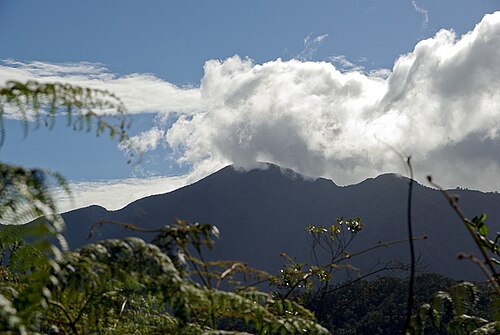
- Map Locations: Google Maps | OpenStreetMap